ProjectGallery.

This portfolio is built as an open-source template — no code changes required to make it your own. All personal information, work experience, projects, and skills are driven entirely by JSON data files. Clone the repo, update the JSON, and your portfolio is live. The project is built with Next.js App Router, TypeScript, Tailwind CSS v4, and shadcn/ui, and ships with a Figma design system so you can customize the look before touching a line of code.
Key Features
100% JSON-driven content — name, bio, experience, projects, and skills all live in data files
Zero-code setup: clone, fill in your details, deploy
Figma design system included for easy visual customization
Built with Next.js App Router, TypeScript, Tailwind CSS v4, and shadcn/ui
Tech Stack
This portfolio is built as an open-source template — no code changes required to make it your own. All personal information, work experience, projects, and skills are driven entirely by JSON data files. Clone the repo, update the JSON, and your portfolio is live. The project is built with Next.js App Router, TypeScript, Tailwind CSS v4, and shadcn/ui, and ships with a Figma design system so you can customize the look before touching a line of code.
100% JSON-driven content — name, bio, experience, projects, and skills all live in data files
Zero-code setup: clone, fill in your details, deploy
Figma design system included for easy visual customization
Built with Next.js App Router, TypeScript, Tailwind CSS v4, and shadcn/ui
WebCrawler
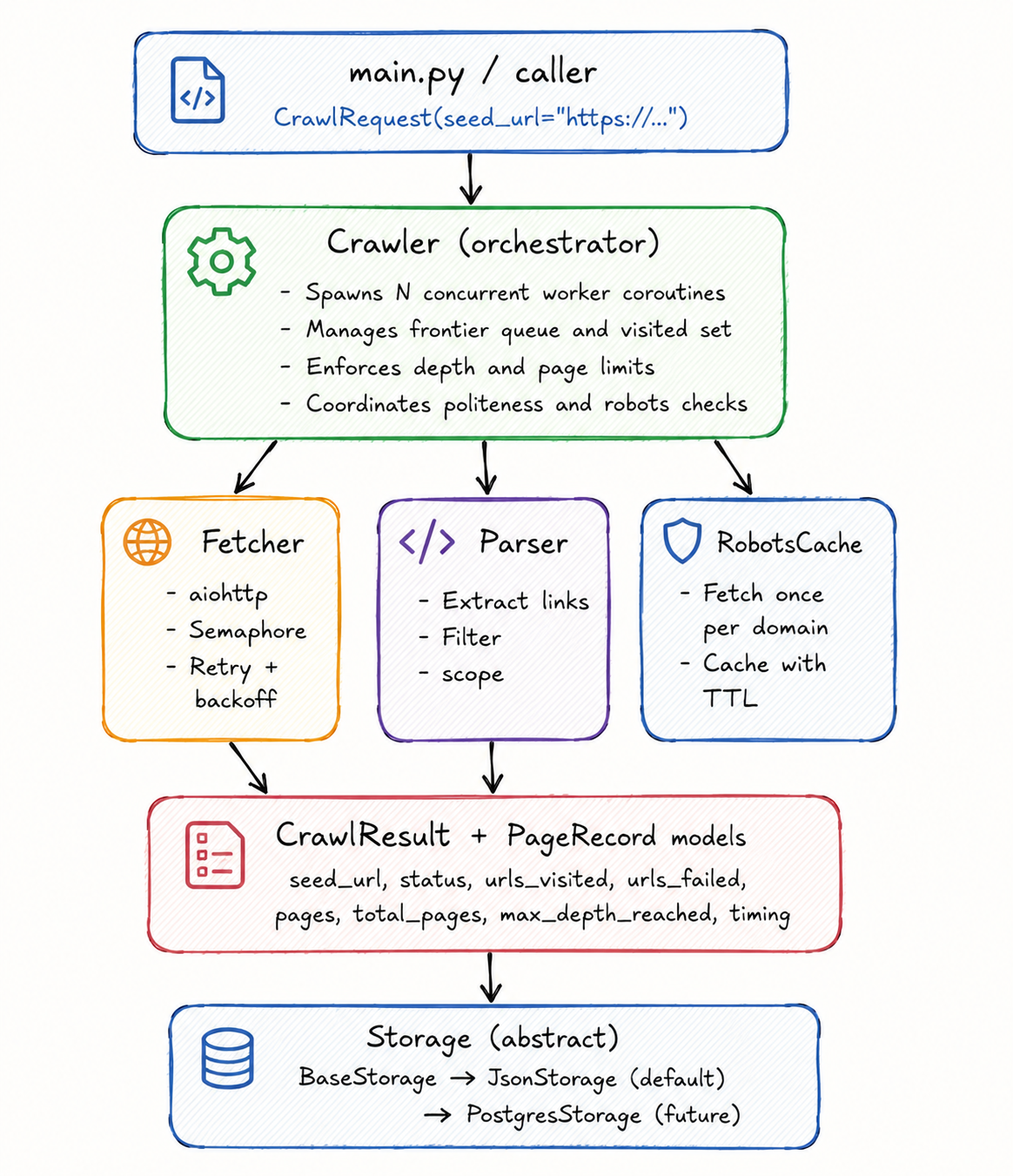
WebCrawler is a production-oriented asynchronous web crawler built entirely from scratch in Python without third-party crawling frameworks. The crawler uses asyncio and aiohttp to concurrently traverse websites while respecting robots.txt, crawl delays, and configurable politeness constraints. It implements frontier queue orchestration, path-scoped crawling, retry/backoff strategies, abstract storage layers, and extensive mocked test coverage to ensure reliability and scalability.
Key Features
Concurrent async crawling using asyncio and aiohttp worker pipelines
robots.txt parsing, crawl-delay support, and politeness-aware scheduling
Path-scoped crawling with URL normalization and duplicate prevention
75+ mocked unit tests covering async workflows, retries, and crawler orchestration
Tech Stack
WebCrawler
WebCrawler is a production-oriented asynchronous web crawler built entirely from scratch in Python without third-party crawling frameworks. The crawler uses asyncio and aiohttp to concurrently traverse websites while respecting robots.txt, crawl delays, and configurable politeness constraints. It implements frontier queue orchestration, path-scoped crawling, retry/backoff strategies, abstract storage layers, and extensive mocked test coverage to ensure reliability and scalability.
Concurrent async crawling using asyncio and aiohttp worker pipelines
robots.txt parsing, crawl-delay support, and politeness-aware scheduling
Path-scoped crawling with URL normalization and duplicate prevention
75+ mocked unit tests covering async workflows, retries, and crawler orchestration
Web Scraper
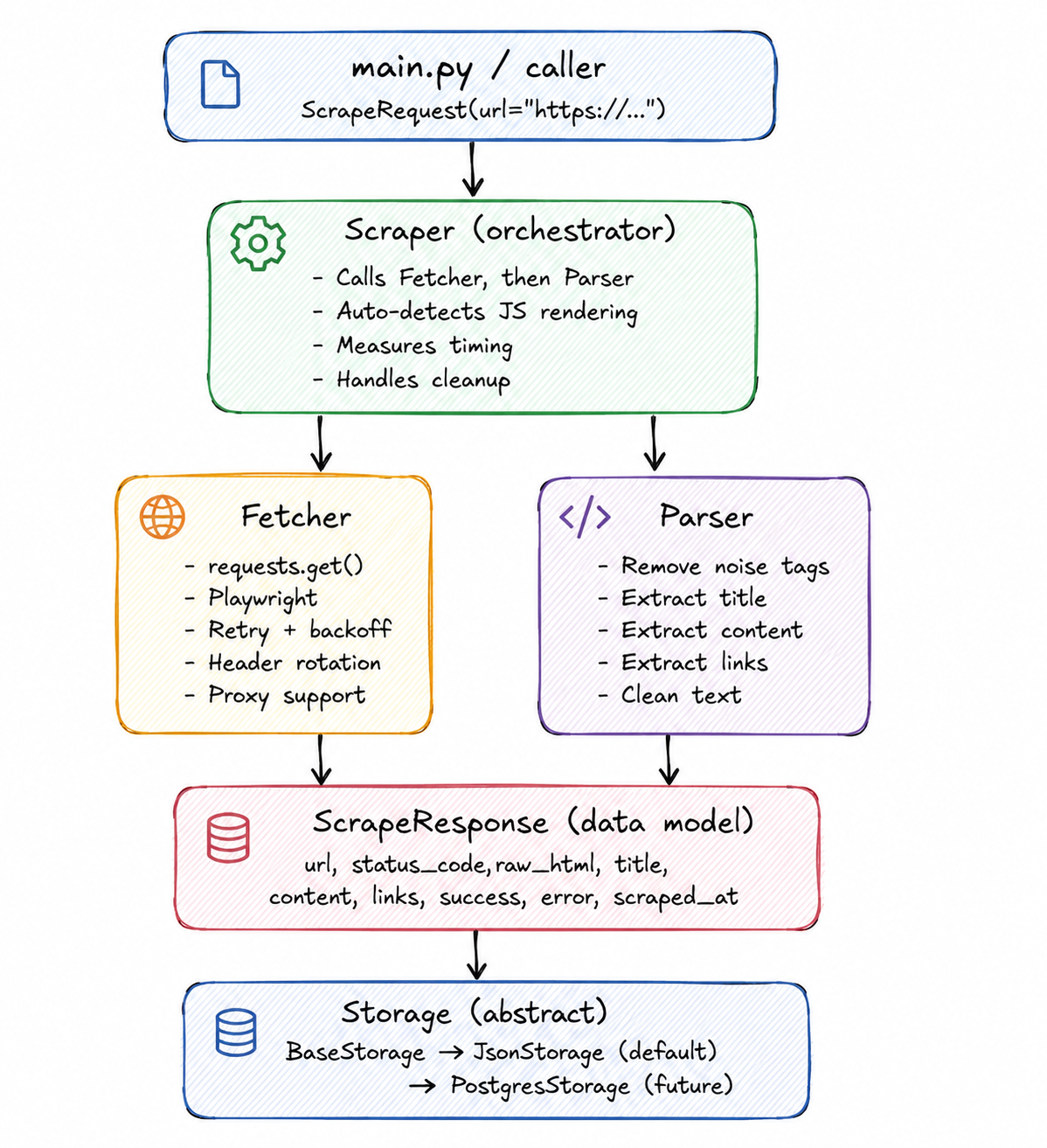
Web Scraper is a modular Python scraping framework designed to handle both traditional static pages and JavaScript-rendered applications. The system combines requests-based fetching with Playwright-powered browser rendering, automatically detecting sparse JS shells and retrying pages using a headless browser when required. The architecture includes retry/backoff handling, user-agent rotation, abstract storage layers, structured logging, and extensive mocked test coverage.
Key Features
Automatic detection and handling of JavaScript-rendered pages using Playwright
Retry/backoff strategies with resilient fetch pipelines and timeout handling
Structured logging, abstract storage architecture, and typed data models
45+ mocked unit tests covering fetch logic, parsing, retries, and browser workflows
Tech Stack
Web Scraper
Web Scraper is a modular Python scraping framework designed to handle both traditional static pages and JavaScript-rendered applications. The system combines requests-based fetching with Playwright-powered browser rendering, automatically detecting sparse JS shells and retrying pages using a headless browser when required. The architecture includes retry/backoff handling, user-agent rotation, abstract storage layers, structured logging, and extensive mocked test coverage.
Automatic detection and handling of JavaScript-rendered pages using Playwright
Retry/backoff strategies with resilient fetch pipelines and timeout handling
Structured logging, abstract storage architecture, and typed data models
45+ mocked unit tests covering fetch logic, parsing, retries, and browser workflows
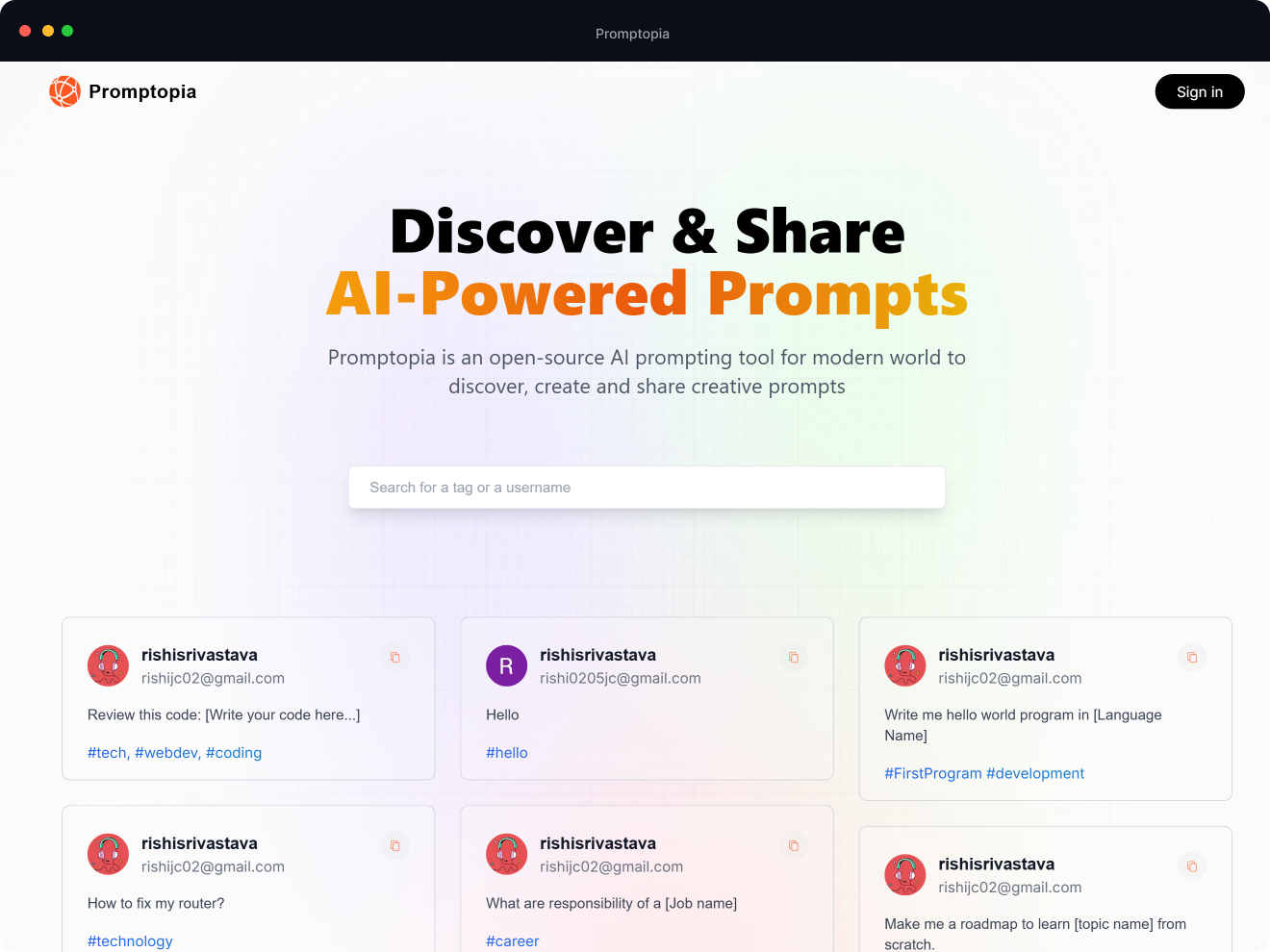
Promptopia is a fully responsive prompt-sharing platform built using Next.js and deployed on Vercel. It allows users to create, share, and explore prompts while providing secure authentication through Google OAuth using NextAuth. The platform uses MongoDB for efficient data storage and leverages Next.js routing for seamless navigation and performance.
Key Features
Google OAuth authentication using NextAuth
Create, edit, and manage prompts with CRUD operations
Responsive UI built with Next.js
MongoDB-based data storage for efficient prompt retrieval
Tech Stack
Promptopia is a fully responsive prompt-sharing platform built using Next.js and deployed on Vercel. It allows users to create, share, and explore prompts while providing secure authentication through Google OAuth using NextAuth. The platform uses MongoDB for efficient data storage and leverages Next.js routing for seamless navigation and performance.
Google OAuth authentication using NextAuth
Create, edit, and manage prompts with CRUD operations
Responsive UI built with Next.js
MongoDB-based data storage for efficient prompt retrieval
MernBlog
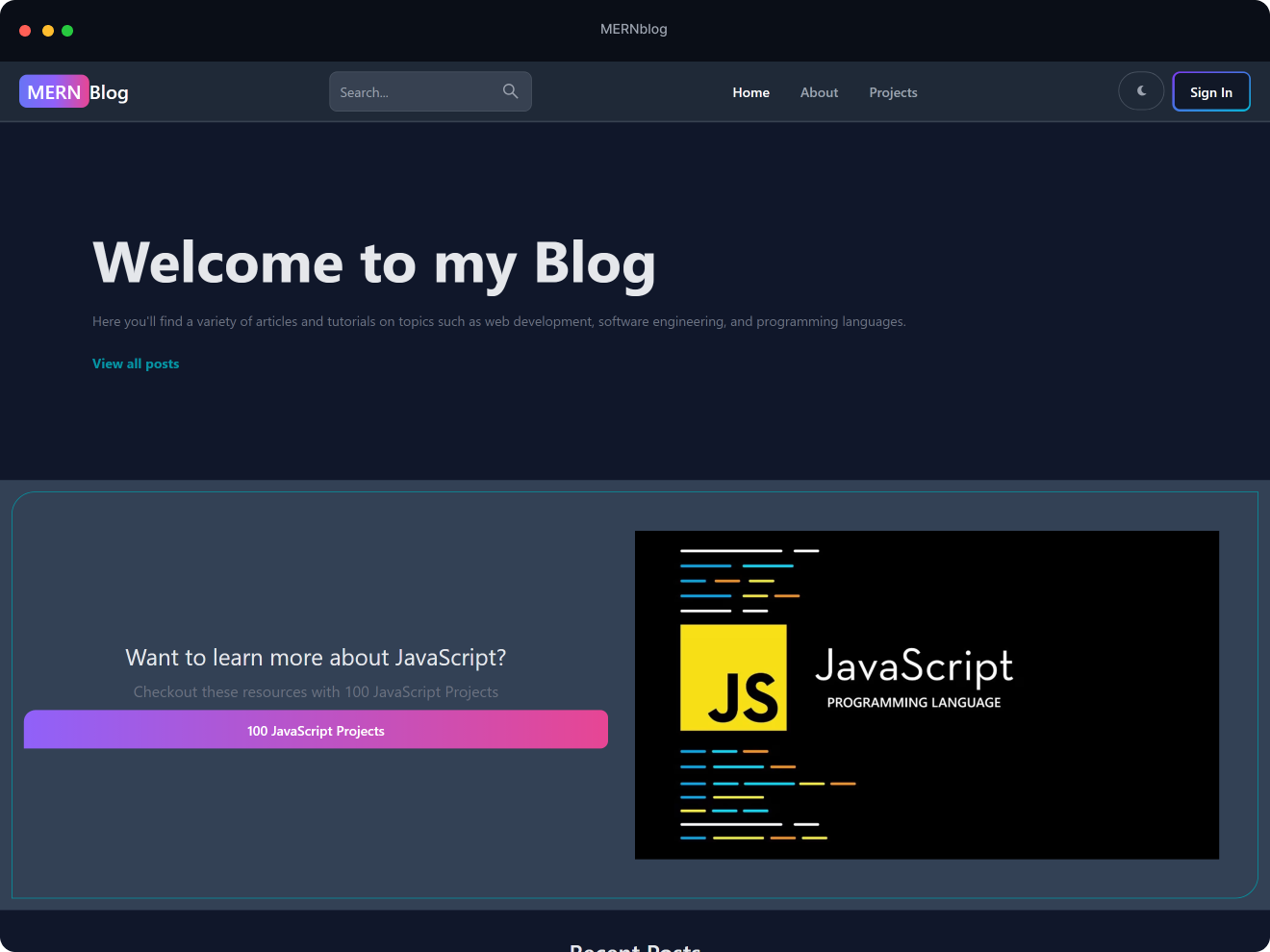
MERN Blog is a full-stack blogging platform built using React, Node.js, Express.js, and MongoDB. The application includes secure authentication using JWT and Google OAuth and features a responsive UI built with Tailwind CSS. The backend architecture is optimized to handle high traffic.
Key Features
JWT and Google OAuth authentication
Full CRUD blogging functionality
Responsive frontend built with React and Tailwind CSS
Backend scaled to handle millions of monthly requests
Tech Stack
MernBlog
MERN Blog is a full-stack blogging platform built using React, Node.js, Express.js, and MongoDB. The application includes secure authentication using JWT and Google OAuth and features a responsive UI built with Tailwind CSS. The backend architecture is optimized to handle high traffic.
JWT and Google OAuth authentication
Full CRUD blogging functionality
Responsive frontend built with React and Tailwind CSS
Backend scaled to handle millions of monthly requests

Coinwatcher
Coinwatcher is a collaborative expense tracking application designed to help users track spending habits and gain insights through visually engaging graphs and charts. The project was developed with Flutter and Dart, using Bloc state management to organize application logic and improve performance.
Key Features
Interactive expense tracking interface
Visual spending insights using charts and graphs
Bloc state management for scalable architecture
Collaborative development with cross-functional team
Tech Stack
Coinwatcher
Coinwatcher is a collaborative expense tracking application designed to help users track spending habits and gain insights through visually engaging graphs and charts. The project was developed with Flutter and Dart, using Bloc state management to organize application logic and improve performance.
Interactive expense tracking interface
Visual spending insights using charts and graphs
Bloc state management for scalable architecture
Collaborative development with cross-functional team
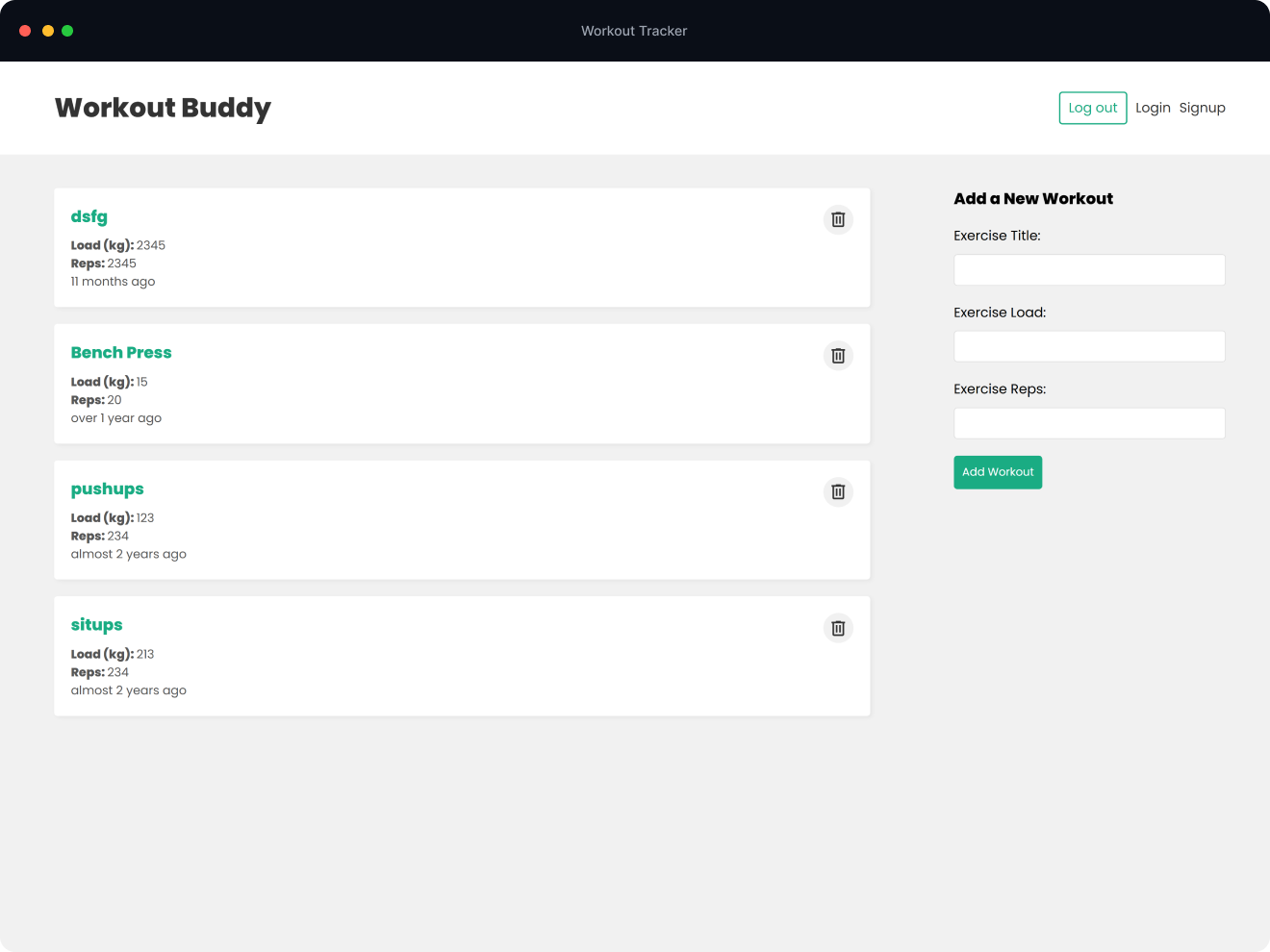
Workout Tracker
Workout Tracker is a full-stack web application built using React for the frontend and Node.js with Express.js for the backend. The platform allows users to log workouts, track progress, and manage fitness data securely. JWT authentication ensures secure user sessions while MongoDB provides efficient data storage.
Key Features
Workout logging and progress tracking
JWT-based secure authentication
MongoDB database integration
Full-stack architecture using React and Node.js
Tech Stack
Workout Tracker
Workout Tracker is a full-stack web application built using React for the frontend and Node.js with Express.js for the backend. The platform allows users to log workouts, track progress, and manage fitness data securely. JWT authentication ensures secure user sessions while MongoDB provides efficient data storage.
Workout logging and progress tracking
JWT-based secure authentication
MongoDB database integration
Full-stack architecture using React and Node.js